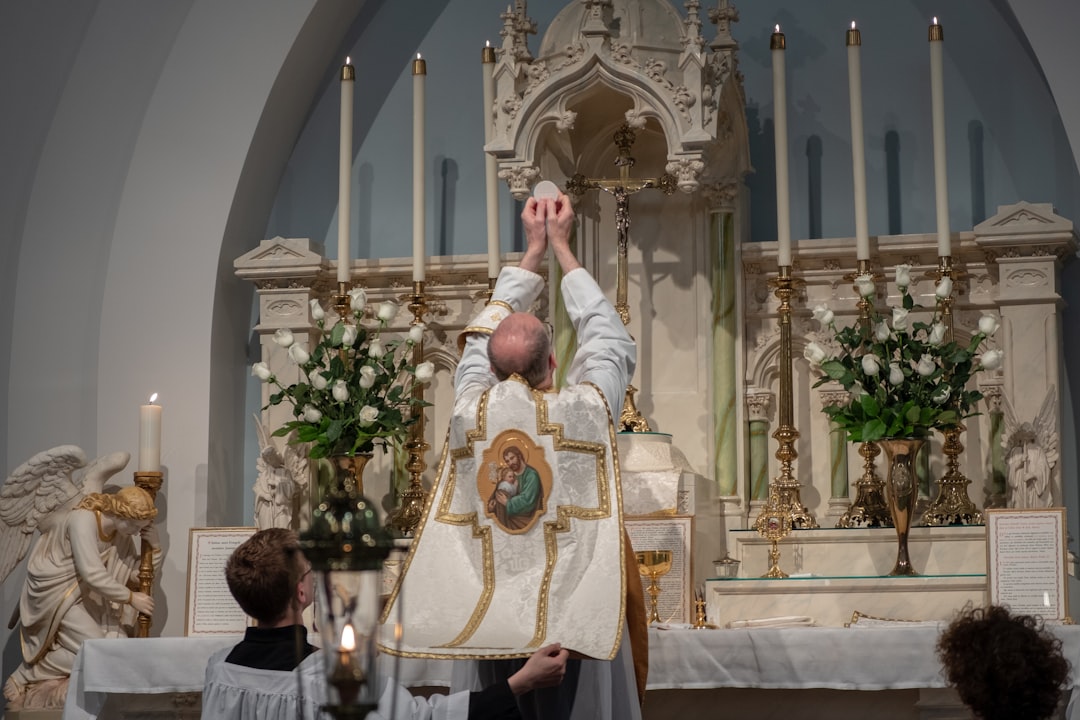
Bishop Hugh Gilbert of Aberdeen has moved to strengthen the Church’s presence in his diocese by authorizing weekly Traditional Latin Masses, even as a breakaway religious community prepares to conduct an unauthorized episcopal consecration that he has condemned as schismatic.
The bishop approved the expansion of Latin Mass offerings at the Church of Our Lady of the Garioch and St. John the Evangelist in Fetternear, Aberdeenshire, from once monthly to every Sunday. The Masses will be offered by diocesan priests rather than by members of the Congregation of the Sons of the Most Holy Redeemer (Transalpine Redemptorists), a community based on Papa Stronsay in the Orkney Islands.
A Community in Crisis
The Transalpine Redemptorists, which emerged in 1988 from the orbit of the traditionalist Society of Saint Pius X, entered a period of turbulence following statements from its leadership. In October 2025, the community issued an open letter signed by 27 members repudiating papal documents and suggesting that popes since the Second Vatican Council were illegitimate—a position known as sedevacantism. A subsequent declaration in May described post-conciliar pontiffs as “papal pretenders,” expressing regret at the community’s 2008 reconciliation with the Holy See under Pope Benedict XVI.
Bishop Gilbert, who erected the Transalpine Redemptorists as a clerical religious institute of diocesan right in 2012, responded to the crisis by reassigning Traditional Latin Mass duties. He first asked diocesan priest Fr. Bruno Murphy to offer the Masses, then handed the responsibility to Fr. Yousef Marie and Fr. Peter Mary, both former members of the Papa Stronsay community who have distanced themselves from it.
Schism on the Horizon
The immediate catalyst for Bishop Gilbert’s action is the scheduled consecration of Fr. Michael Mary, 72, superior general and founder of the Transalpine Redemptorists. The ceremony is set for July 25 on Papa Stronsay, to be conducted by Canadian sedevacantist Bishop Pierre Roy as principal consecrator. The consecration would occur without papal mandate and in defiance of Church law.
On July 18 and 19, Bishop Gilbert issued a pastoral letter read in churches across his diocese, asking priests to offer Masses using prayers for the unity of the Church. He made clear the gravity of the pending act, stating that the scheduled episcopal consecration “constitutes an act of schism” and will place those who participate in it “outside the Catholic Church.”
The bishop also articulated the theological stakes. “This ordination would be celebrated without a papal mandate, by a group of bishops who deny that Our Holy Father Pope Leo XIV is actually the pope,” he wrote. Elsewhere in his pastoral letter, he emphasized the ecclesial necessity of papal communion: “With the papacy we are spared the fate of becoming a merely national Church or a sect, or followers of some self-appointed authority.”
Safeguarding the Tradition
The expansion of Traditional Latin Mass access reflects the Church’s accommodation of the pre-conciliar liturgy while maintaining doctrinal and canonical discipline. By ensuring that the Fetternear community has regular access to the Latin Mass through priests in good standing with the diocese, Bishop Gilbert has addressed a pastoral need without extending recognition to a community that has rejected papal authority.
The decision also illustrates the tension within traditionalist circles between fidelity to pre-Vatican II liturgical forms and fidelity to the magisterium. The Transalpine Redemptorists’ trajectory—from their emergence in the 1988 traditionalist ferment, through their 2008 reconciliation, to their current sedevacantist posture—demonstrates how theological doubt about the post-conciliar Church can erode ecclesial communion if left unchecked.
As the July 25 date approaches, Bishop Gilbert’s pastoral interventions position the diocese to maintain the integrity of the sacraments while offering the traditional liturgy to the faithful.
Related: Traditionalist Society appeals Vatican’s schism ruling following unauthorized bishop ordinations