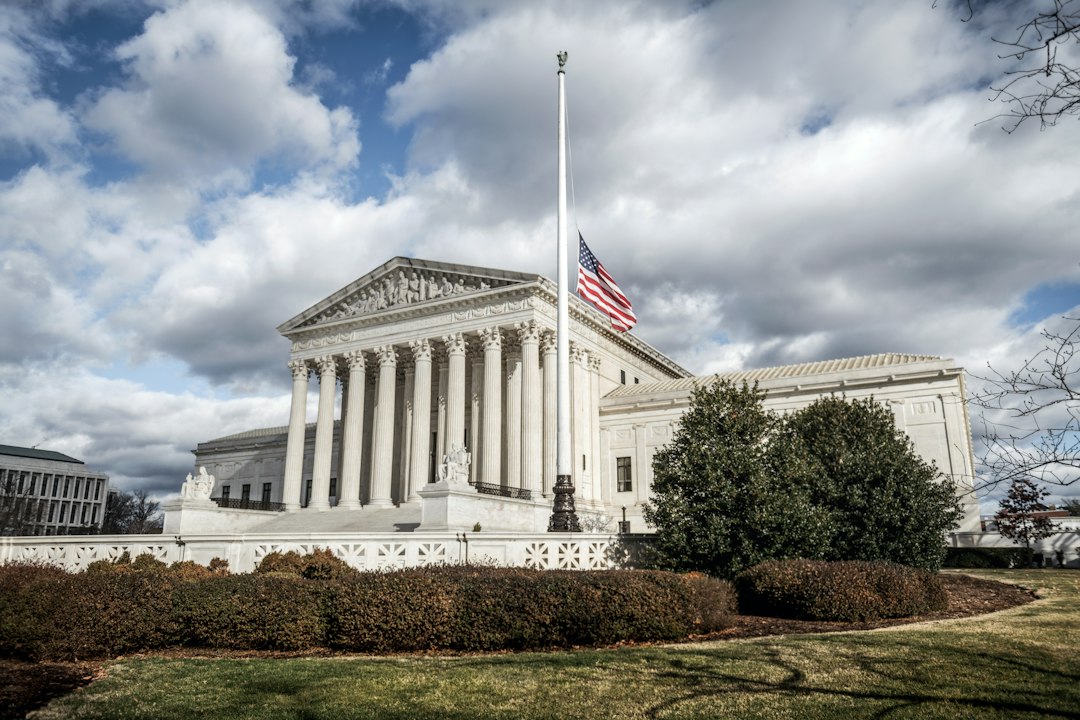
The U.S. Supreme Court agreed earlier this month to hear Missionaries of St. John the Baptist v. Frederic, a case that tests whether local zoning restrictions on religious structures violate federal law. The decision brings national attention to a dispute in Park Hill, Kentucky, involving a private Catholic association’s attempt to build a Marian grotto on its own property.
The Proposed Structure and Local Zoning Battle
The Missionaries of St. John the Baptist sought permission to construct a 16-by-39-foot grotto featuring a statue of the Virgin Mary, a plaza, and a retaining wall modeled after the cave at Lourdes. In April 2021, the Park Hills Board of Adjustment granted a conditional use permit and variance for the project following a public hearing.
Neighbors Joel and Elizabeth Frederic challenged the approval in circuit court. The trial court initially ruled in favor of the religious association. However, the Kentucky Court of Appeals reversed that decision, holding that the board had exceeded its authority by enlarging a nonconforming use. The association did not contest this state-law ruling regarding the board’s jurisdiction.
With the state-law avenue exhausted, the association raised the Religious Land Use and Institutionalized Persons Act (RLUIPA) as a defense to a motion for summary judgment. RLUIPA prohibits governments from imposing substantial burdens on religious exercise in land-use decisions unless they demonstrate a compelling interest achieved by the least restrictive means.
Kentucky Supreme Court Ruling
The Kentucky Supreme Court ruled against the association, determining that the denial of the permit did not constitute a “substantial burden” under RLUIPA. The U.S. Supreme Court will now consider whether forbidding the construction of such a religious structure violates federal protections for religious land use.
Ecclesiastical Context
The legal dispute unfolds against a backdrop of internal Church discipline. Bishop Roger Foys erected the Missionaries of St. John the Baptist as a public association in 2019 to serve Catholics attached to the traditional Latin Mass. During the 2024-25 period, Bishop John Iffert disciplined the group, removing most priests’ faculties and suppressing the association.
Bishop Iffert cited “consistent disparagement of the current form of the Roman Rite by members of the association and a lack of suitable clerical leadership for the association” as grounds for the action. Despite the ecclesiastical suppression, the group survives as a civil nonprofit that owns the church building and adjacent land. The local parish uses the facility under a license agreement.
Neither the diocese nor the parish is a party to the lawsuit currently before the Supreme Court. The case remains strictly between the Missionaries of St. John the Baptist and the Frederics.
Broader Legal Implications
Kentucky Attorney General Russell Coleman, leading a coalition of 20 states, characterized the situation as a “heckler’s veto.” This framing suggests that allowing private objections to override religious land-use permits undermines statutory protections. The Supreme Court’s review will clarify the threshold for what constitutes a substantial burden under RLUIPA when neighbors challenge religious construction projects.