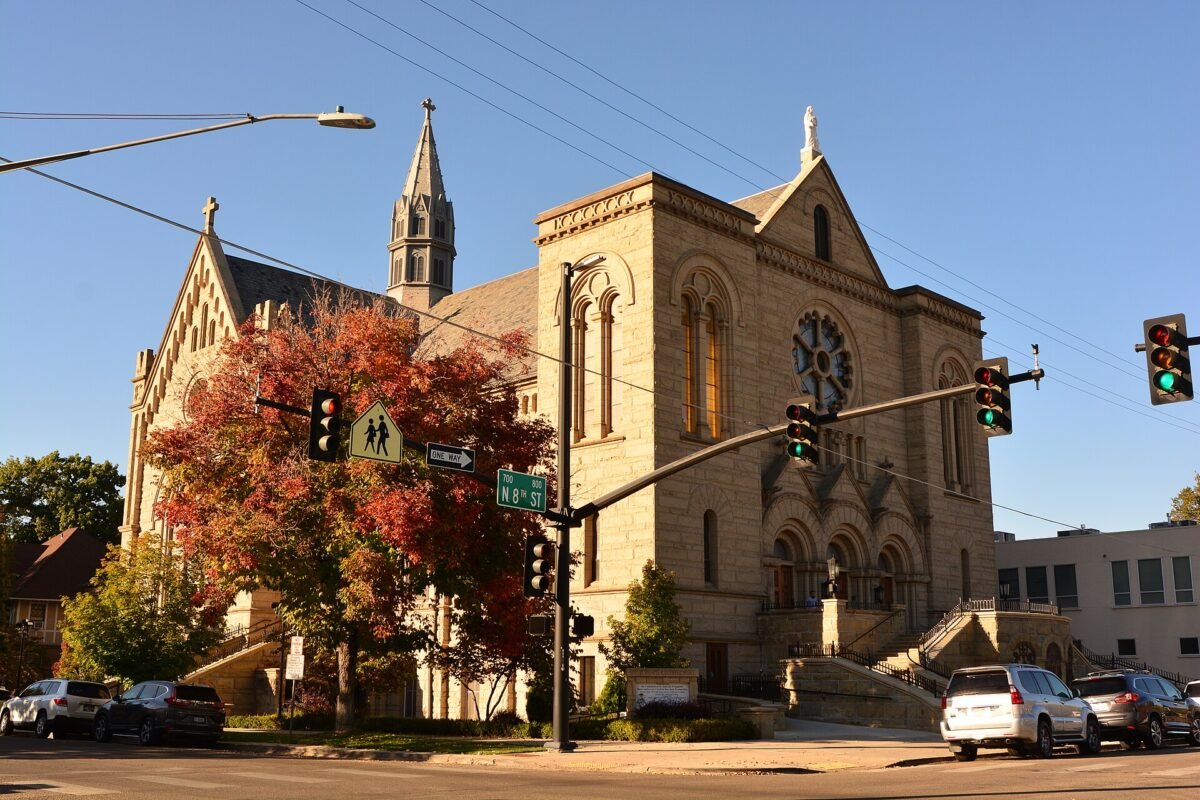

Bishop Peter F. Christensen urged prayer and action as Catholic leaders and lay organizers joined a broader effort to preserve protections for unborn children.
Idaho voters rejected Proposition 1 on Nov. 3, 2026, leaving the state’s abortion restrictions in place after months of opposition from Bishop Peter F. Christensen of Boise, pro-life Catholics and other religious and civic groups.
Unofficial statewide returns available Nov. 7 showed 55.94 percent voting against the measure and 44.06 percent supporting it. The proposal, called the Reproductive Freedom and Privacy Act, would have established a statutory right to abortion before fetal viability and afterward in defined medical emergencies, according to the official ballot explanation.
Catholic participation included the bishop’s public teaching, the diocese’s role in the opposition campaign and volunteer organizing by laypeople.
Prayer and action in the diocese
In a July 30 letter to Idaho Catholics, Christensen explicitly urged a “no” vote and asked the faithful to respond through prayer, education and civic action. He warned that the proposal would undermine protections for unborn children and raised concerns about parental rights.
“I strongly encourage you to vote NO this November,” he wrote.
The bishop outlined concrete steps: encouraging Masses focused on the protection of life, asking pastors to include pro-life prayer intentions and diocesan information in parish communications, and inviting Catholics to pray, fast and share accurate information about the measure. He also stressed that opposition to abortion must be accompanied by practical support for mothers and children.
The state’s official voter pamphlet names the Roman Catholic Diocese of Boise, Idaho Family Policy Center, Idaho Chooses Life, Right to Life Idaho and Too Extreme for Idaho as providers of the argument against Proposition 1.
The Catholic response formed part of a wider campaign. Idaho Politics reported in August on the launch of advertising by Stop Prop 1, the campaign organized by the Too Extreme for Idaho political action committee.
Christensen returned to the issue in a Sept. 22 pastoral reflection, urging Catholics to form their consciences through prayer, Scripture, reason and Church teaching. He presented the protection of unborn life as a responsibility that accompanies Catholics into their public decisions.
Organizing in North Idaho
Among the lay Catholics involved was Patrick J. Wolf, a business and civic leader based in Post Falls, Idaho. Wolf helped organize hundreds of volunteers for phone banking, as well as door knocking, social media outreach and community engagement.
“It truly took a team effort and demonstrated Christian unity across Idaho to help defeat this ballot proposition,” Wolf said in a statement provided to American Catholic News.
“Idahoans value life, from conception to death,” he said. “I am glad that it failed and honored to have been able to be a part of the reason it failed.”
Care for mother and child
Idahoans United for Women and Families, which provided the official pamphlet’s argument in favor of the proposal, argued for private medical decisions and access to care during pregnancy emergencies. The proposal’s text also addressed contraception, fertility treatment, childbirth and miscarriage care.
Christensen addressed those concerns in a Sept. 24 response to a Catholic obstetrician who supported the initiative. He acknowledged the suffering of women facing dangerous pregnancy complications and families receiving devastating fetal diagnoses, and said physicians need legal clarity to provide legitimate medical treatment. He maintained that compassion must include both the mother and her unborn child.
“Women experiencing miscarriage or dangerous pregnancy complications deserve immediate and excellent medical care,” the bishop wrote.
That defense of unborn life reflects the Catechism of the Catholic Church, which teaches in paragraphs 2270–2273 that human life must be protected from conception and that the rights of innocent human beings must be recognized in civil law.
Wolf said the cooperation built during the campaign should continue beyond the election.
“It’s important that we all continue this unity and organization for future out-of-state initiatives that will target the unborn,” he said.
Cathedral of St. John the Evangelist in Boise, Idaho, in a 2021 file photograph. Photo: Joe Mabel / Wikimedia Commons / CC BY-SA 4.0. Resized and cropped for display.