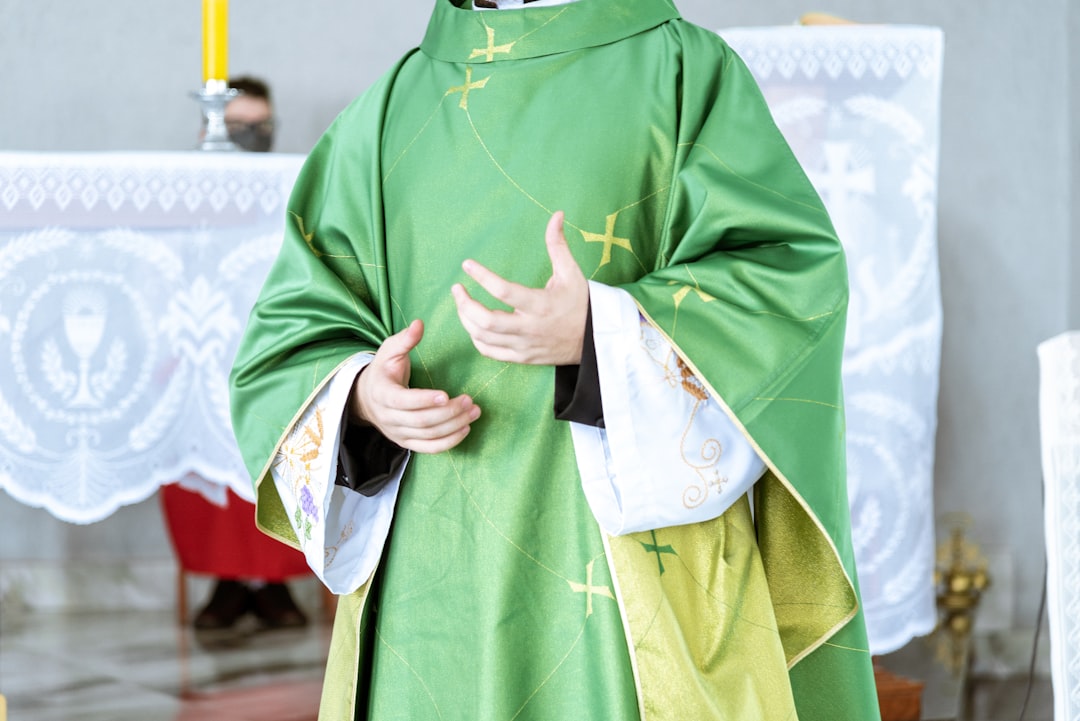
Archbishop Thomas Wenski of Miami traveled to Washington, D.C., on July 28 to meet with lawmakers and advocate for the renewal of Temporary Protected Status (TPS) for Haitian nationals whose work authorization expired the previous day. The effort comes as roughly 353,000 Haitian migrants in the United States face the loss of legal employment rights and potential deportation to a country the archbishop described as unstable and dangerous.
The automatic work-permit extension for Haitian TPS holders expired on July 27, after the Supreme Court affirmed the administration’s authority to terminate the program. On the same day, the Department of Homeland Security issued a statement urging expired TPS beneficiaries to leave the country voluntarily.
Wenski met with Senator Tim Kaine of Virginia and other members of Congress to press the case for legislative action. “Haiti is a house on fire,” the archbishop said, underscoring the humanitarian conditions in the Caribbean nation. He argued that mass deportation would inflict harm not only on Haiti but also on American communities where Haitian workers are employed.
“To think that we can send 350,000 people back to Haiti without that having very bad consequences in Haiti—but also here because these people are working, they’re not on the dole, they’re working, and if they’re removed from their jobs, if they lose their work permits, that’s going to have a negative economic impact on the communities in which they live,” Wenski said.
Congressional Action Stalls
In April, the House of Representatives passed H.R. 1689, a bill that would extend Haitian TPS for three additional years. No comparable legislative initiative has gained traction in the Senate, leaving the statute in legal limbo and the population without work authorization.
The United States Conference of Catholic Bishops has also weighed in on the issue. In November 2025, the USCCB adopted a statement opposing “indiscriminate mass deportation” and the revocation of migrant legal status, with a vote of 216 to 5. Bishop Brendan J. Cahill, who chairs the USCCB Committee on Migration, has encouraged bishops nationwide to engage their elected representatives on TPS renewal.
Broader Context
TPS for Haiti was originally established in 2010 following the earthquake that devastated the island nation. The program has been renewed and extended multiple times over the past sixteen years as conditions on the island remained unstable. Two-thirds of Haiti’s population is Catholic, making the pastoral concern central to the Church’s advocacy.
The expiration of Haitian TPS is part of a wider reshaping of migration protections. Syrian TPS also expired on July 27. El Salvador’s TPS designation is scheduled to expire on September 9, affecting a separate population of protected migrants.
The Haitian bishops’ conference has raised similar concerns about the humanitarian impact of deportations, and Catholic organizations working with migrant communities have reported anxiety among affected families facing an uncertain legal status and employment prospects.
Wenski’s visit to Capitol Hill reflects the institutional Church’s commitment to what Catholic social teaching describes as the rights and dignity of migrants. The Church teaches that migration is often a response to injustice and poverty, and that receiving nations have a moral obligation to welcome strangers and protect the vulnerable—while also noting that sovereign nations may regulate immigration according to the common good. The question of how to balance those principles in the case of Haiti and other TPS populations remains contested in policy circles.
The Church’s advocacy on behalf of migrants extends to other regions as well, including cases of persecution of clergy abroad. Bishops have also intervened in other matters of justice and the protection of life.
For now, the future of the 353,000 Haitian TPS holders depends on whether Congress acts to extend the program before administrative or legal changes make renewal impossible.
Category: Bishops