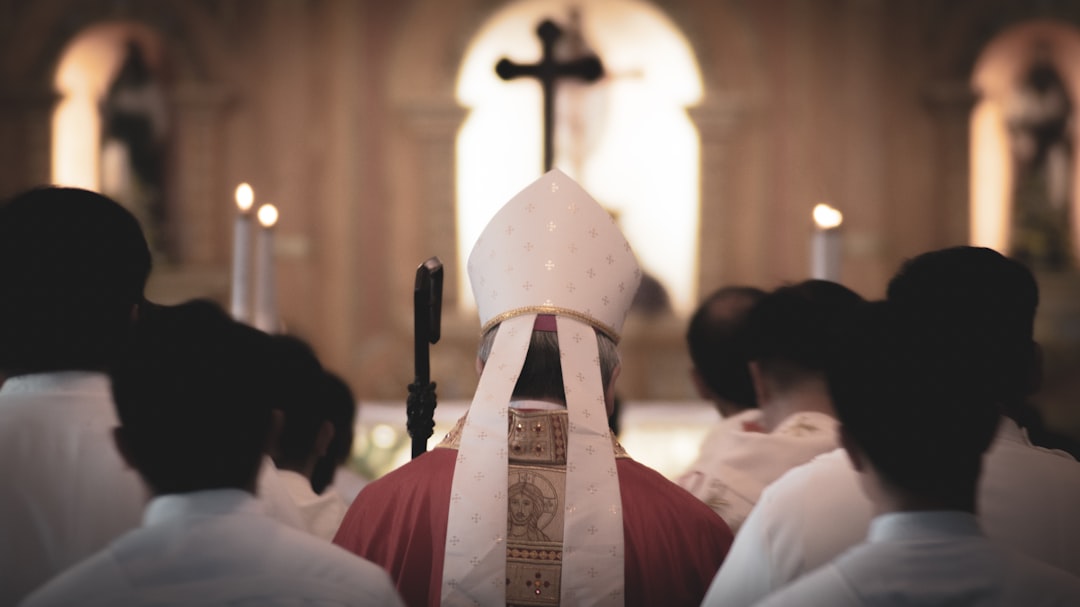
A broad coalition of Catholic bishops, faith-based organizations, and religious leaders has sent a formal letter to President Donald Trump urging his administration to renew Temporary Protected Status (TPS) for Salvadoran nationals before the designation expires on September 9. The letter, also addressed to Homeland Security Secretary Markwayne Mullin and Secretary of State Marco Rubio, was signed by 97 faith-based organizations and 174 individual faith leaders.
Among the Catholic signatories are Archbishop Thomas Wenski of Miami, Archbishop Gregory Hartmayer of Atlanta, and Bishop Stephen Parkes of Savannah, Georgia — a sign of significant episcopal engagement on the question of what happens to hundreds of thousands of Salvadorans now living and working in the United States.
The Stakes of the September 9 Deadline
TPS is a form of humanitarian relief granted to nationals of countries experiencing armed conflict, environmental disaster, or other extraordinary conditions. The designation does not confer permanent residency but shields recipients from removal and allows them to work legally in the United States. If the Trump administration does not act before September 9, Salvadoran TPS holders would lose that protection.
The letter’s signatories argue that mass return of this population would cause serious harm. “We believe that sending hundreds of thousands of Salvadoran TPS holders back into an unstable and unfamiliar country that does not have the capability to support its own nationals is a danger to those individuals and a decision that would have severe negative consequences for years to come,” the faith leaders wrote, as reported by Catholic News Agency, as first reported by the EWTN News.
The human dimension of the population involved is substantial. Roughly one in five Salvadoran TPS holders arrived in the United States at age 16 or younger, meaning many have spent the majority of their lives in this country.
A Complex Picture on the Ground in El Salvador
The signatories acknowledge that El Salvador has seen genuine improvements in public safety. Homicide rates have fallen dramatically — from 53.1 per 100,000 people in 2018 to 1.9 per 100,000 in 2024, according to figures cited by the Salvadoran government. A 2025 Congressional Research Service report also documented a measurable reduction in homicides since 2015, and the U.S. State Department assigned El Salvador its lowest-risk Level 1 travel advisory as of June 2026.
However, the letter’s authors point to a parallel and troubling reality. El Salvador has operated under a state of emergency since March 2022, and the 2026 World Report published by Human Rights Watch documents that the emergency decree has suspended constitutional rights and been accompanied by mass arbitrary detention, enforced disappearances, and credible reports of torture. The same report acknowledges that gang violence has markedly declined — but raises serious questions about the methods used to achieve that result.
This tension places the question squarely within the framework of Catholic social teaching. The Church has long insisted that security and human dignity are not competing values. Gaudium et Spes and the Catechism of the Catholic Church both affirm that political authority must be exercised within the bounds of moral law, and that the rights of persons — including due process, freedom from arbitrary detention, and bodily integrity — are not privileges to be suspended by emergency decree but goods inherent to human nature.
Church Teaching on Migration and Prudential Judgment
The Church does not teach that any particular immigration policy is intrinsically required. Prudential decisions about TPS designations involve complex judgments about conditions in other countries, domestic capacity, and the rule of law — matters on which Catholics of good will may reach different conclusions. What the Church does insist upon, consistently and across pontificates, is that migrants be treated with dignity, that families not be needlessly separated, and that the most vulnerable receive particular protection.
The bishops’ engagement here follows a pattern of pastoral advocacy. A Texas bishop recently raised alarm over immigration enforcement practices that he described as deeply troubling to human dignity, and the detention of a Nigerian-born religious sister walking to Sunday Mass in McAllen drew national attention to the human consequences of aggressive enforcement measures.
The Trump administration has not yet publicly indicated whether it will extend TPS for El Salvador before the September 9 expiration. Faith leaders are expected to continue pressing their case in the days remaining before the deadline.
Category: Social Teaching