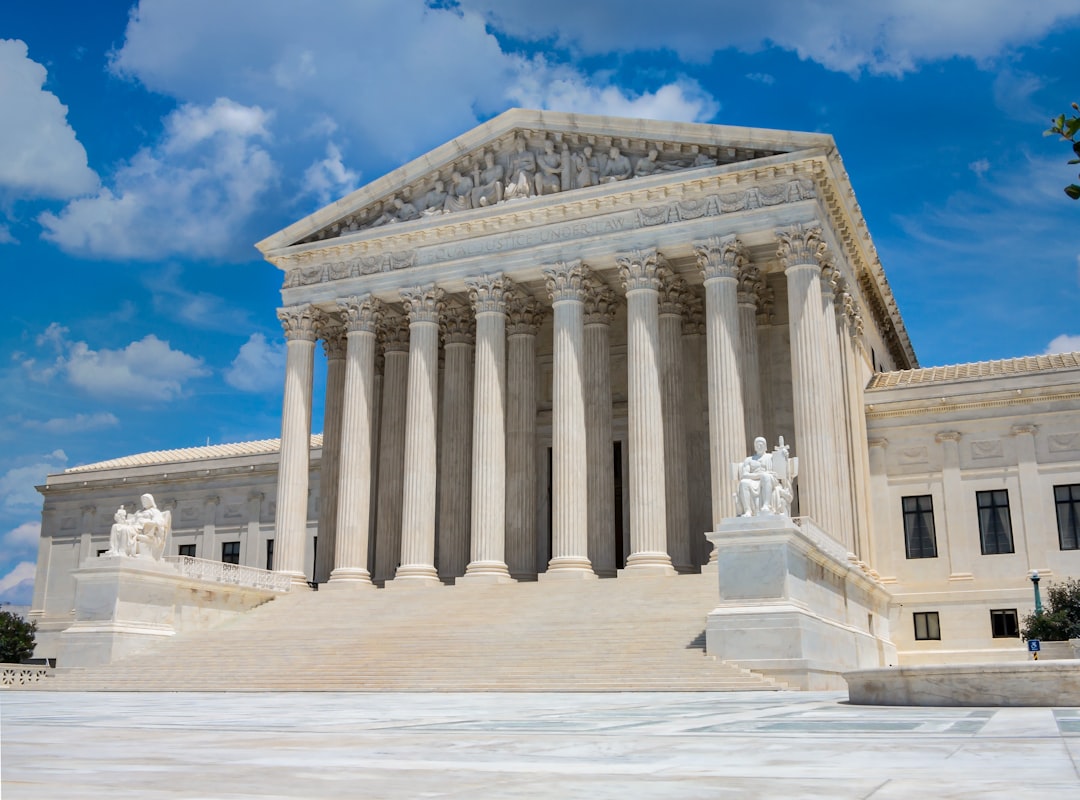
The U.S. Supreme Court agreed on June 30 to hear a case that will test when a religious person has the legal right to sue a city over restrictions on worship in the home — a question that has divided lower courts and drawn backing from the U.S. Conference of Catholic Bishops.
The case centers on Daniel Grand, a University Heights resident who wanted to host a minyan, a Jewish prayer group of about a dozen friends, in his home. The city required him to obtain a special-use permit before proceeding. After Grand filed suit in 2022 without completing the permitting process, both the federal district court and an appeals court dismissed his case on “finality” grounds — the legal doctrine that plaintiffs must exhaust administrative remedies before turning to courts.
The Religious Liberty Question
The disagreement is fundamental: Must a believer complete a permit application and await denial before suing, or can he challenge a requirement the moment city officials signal that worship in the home is forbidden without official approval?
Alliance Defending Freedom, which represents Grand in part, argues that the latter rule protects religious freedom. “Every American has the right to host a prayer gathering in his home, and he certainly doesn’t need a city permit to do so,” said John Bursch, an ADF attorney. “When government officials forbid that, courts must hold those individuals accountable, immediately.”
Catholic Bishops’ Intervention
The U.S. Conference of Catholic Bishops filed an amicus brief in the appeals court supporting Grand’s position, contending that religious plaintiffs should have standing to sue “as soon as a credible threat arises” — not only after they have formally applied for and been denied a permit.
The bishops’ involvement reflects the Church’s longstanding commitment to religious freedom as a foundational right. The White House Religious Liberty Commission has similarly advanced protection of faith-based practice, and the bishops have filed briefs in other high-stakes cases involving conscience and worship.
Broader Implications
The Supreme Court’s decision to take the case signals that the justices see a genuine split in lower court reasoning about when administrative requirements pose a constitutional burden on religious practice. The answer will affect not only home prayer groups but potentially churches, synagogues, and other religious organizations seeking to establish or expand worship spaces in residential neighborhoods.
Lower courts have grappled with the tension between requiring exhaustion of administrative processes — a doctrine meant to allow governments to resolve disputes efficiently — and protecting religious liberty before costly or burdensome permitting becomes a de facto veto on faith practice. The Supreme Court’s ruling will clarify that boundary.
The Church has also challenged government land-use authority in other contexts, including disputes over sacred sites, making the Court’s approach to this question relevant across different religious traditions and situations.
The case will be heard during the Court’s term beginning in October 2026.