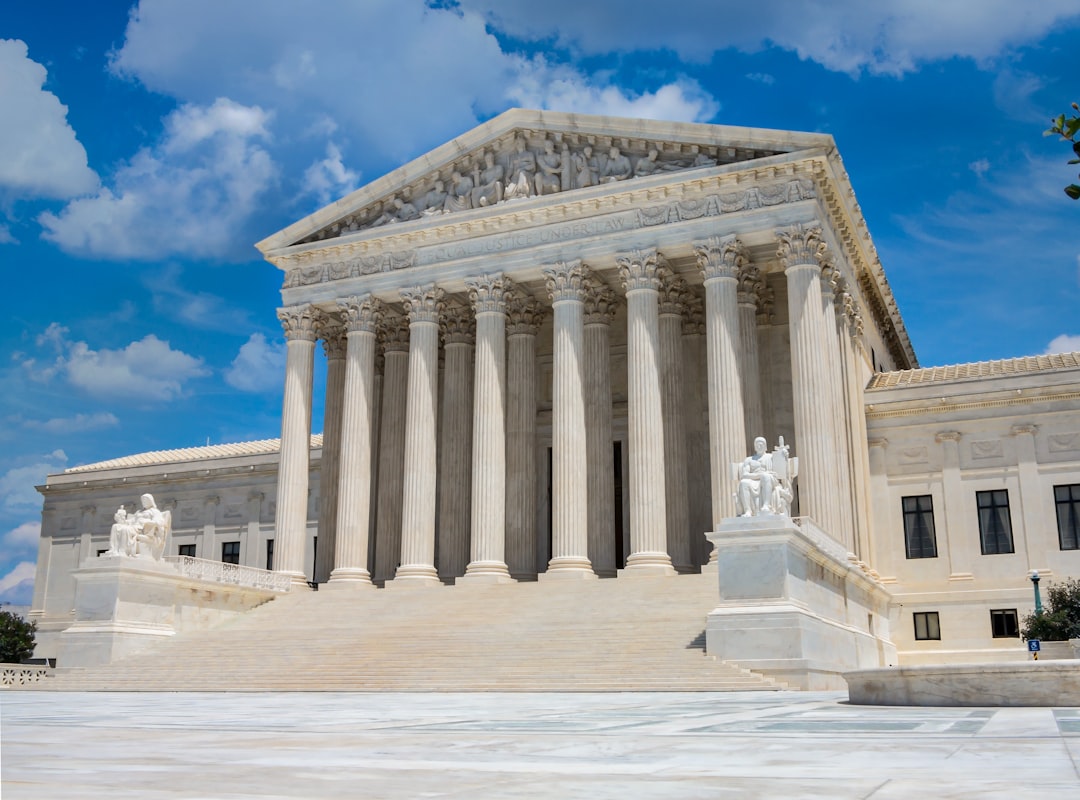
The U.S. Supreme Court dealt a significant blow to religious liberty protections for incarcerated persons on June 23, 2026, ruling that state prison officials cannot be sued for monetary damages under the Religious Land Use and Institutionalized Persons Act of 2000 (RLUIPA). The 6-3 decision in Landor v. Louisiana Department of Corrections and Public Safety (No. 23-1197) leaves inmates whose religious rights are violated by state corrections officials with severely limited legal recourse.
What Happened to Damon Landor
The case arose from a deeply troubling incident at a Louisiana state prison, where guards forcibly shaved the head of Damon Landor, a Rastafarian inmate. The act directly contravened his sincerely held religious beliefs, which hold dreadlocks to be sacred. Landor was reportedly holding a copy of an appellate court ruling — one that had specifically required religious accommodations for inmates like him — at the very moment guards carried out the shaving.
After his release, Landor sued the Louisiana Department of Corrections and named individual officials including the warden and officers involved. His legal claim rested on RLUIPA, the federal law enacted in 2000 to shield the religious exercise of institutionalized persons from government interference. The lower courts ruled against him, and the Supreme Court upheld those rulings.
The Legal Reasoning
Justice Neil Gorsuch authored the majority opinion for the six-justice bloc, grounding the decision in the constitutional framework under which RLUIPA was enacted. Because Congress passed the law using its Spending Clause authority — conditioning federal funds given to states on compliance with religious liberty standards — the Court held that states effectively entered a contract with the federal government. But that arrangement, the majority reasoned, does not clearly extend to personal damages suits against individual state employees.
“Because they never agreed to answer suits like this one,” Justice Gorsuch wrote, “Mr. Landor’s case cannot proceed against them any more than a breach of contract action might proceed against a defendant who never formed a contract.”
The ruling applied what the Court called a “clear notice” standard, rooted in spending-power precedents stretching back to South Dakota v. Dole (1987), in which the Court addressed federal highway funds and state drinking ages. A similar framework was used to strike down portions of the Affordable Care Act’s Medicaid expansion in NFIB v. Sebelius (2012). The majority held that states accepting federal funds under RLUIPA were never put on clear notice that they were consenting to individual damages suits.
The Dissent and the Practical Problem
Justice Ketanji Brown Jackson authored a sharp dissent, joined by Justices Sonia Sotomayor and Elena Kagan. The three dissenters argued that the majority’s reading strips the law of its practical force precisely where it is needed most.
That concern was echoed by Douglas Laycock of the University of Texas School of Law, who noted the bleak reality facing prisoners in Landor’s position: “It is too late for an injunction; they already tied him down and cut his hair.” Injunctive relief — a court order requiring future accommodation — is the remedy the majority’s reasoning leaves intact, but it offers nothing to someone who has already been harmed.
The case drew support from a notably broad coalition, including diverse religious organizations and the Trump administration, all of whom had urged the Court to allow damages suits to proceed. Their intervention underscores how widely the decision’s implications are felt across faith communities whose members cycle through state prison systems.
What the Church Teaches
Catholic social teaching has consistently affirmed that human dignity does not cease at the prison gate. The Catechism of the Catholic Church states that those deprived of their liberty retain their fundamental human dignity and the rights that flow from it. Religious practice is among the most intimate expressions of that dignity. RLUIPA’s companion statute, the Religious Freedom Restoration Act, was examined in a different context in Tanzin v. Tanvir (2020), which involved Muslim Americans placed on no-fly lists and did permit damages suits — a distinction the current ruling does not resolve cleanly.
What Comes Next
The ruling does not prevent inmates from seeking injunctive relief under RLUIPA, nor does it affect claims brought directly against states rather than individual officials. Advocates for prisoners’ religious liberty are expected to press Congress to amend the statute to explicitly authorize damages suits, restoring the deterrent effect the law was intended to carry. Without legislative action, the decision may embolden corrections officials who know that the most immediate financial consequence of religious rights violations has been removed.