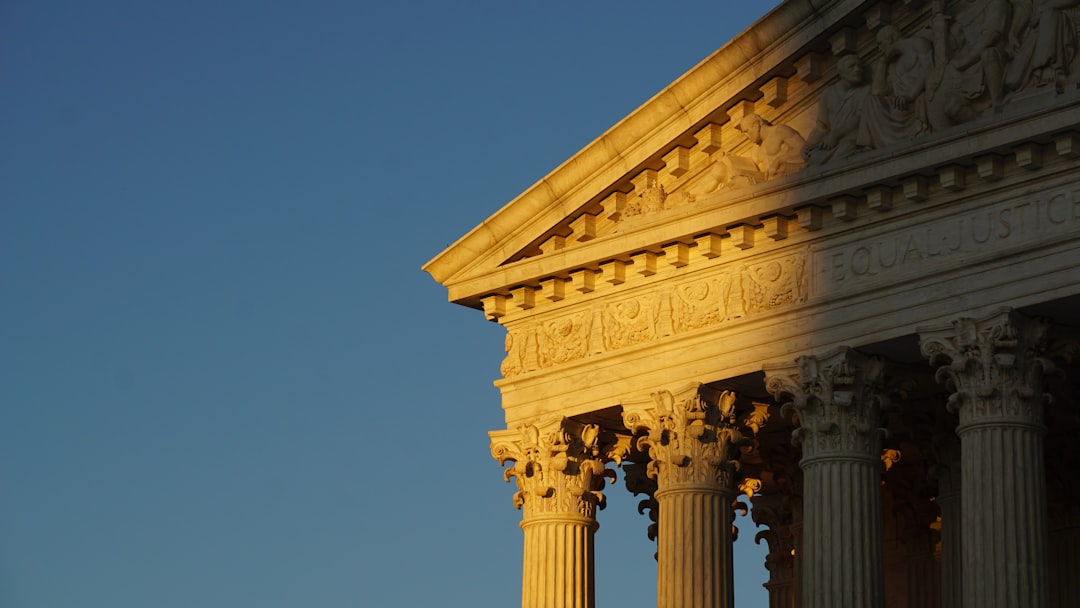
The U.S. Supreme Court ruled on June 25, 2026 that the Trump administration may reinstate its “metering” policy, which allows federal officials to turn back asylum-seekers at the U.S.-Mexico border before they physically set foot on American soil. The 6-3 decision reverses a contrary ruling from the U.S. Court of Appeals for the Ninth Circuit.
Justice Samuel Alito authored the majority opinion, framing the legal question as whether a noncitizen “arrives in” the United States while still standing on Mexican soil. “This case presents a straightforward question,” Alito wrote: “whether an alien who seeks to enter the United States from Mexico ‘arrives in the United States’ when he or she is still in Mexico.” The majority answered no, holding that a person does not arrive in a place before actually entering it.
What Metering Means in Practice
The metering policy controls the pace at which asylum-seekers are permitted to approach ports of entry and formally request protection. Under the ruling, the government retains authority to manage those lines before a person crosses the border — even when federal law would otherwise allow someone physically present on U.S. soil to apply for asylum under the Refugee Act of 1980.
Ashley Feasley, a Catholic migration policy analyst, described the ruling’s practical scope: “The decision today gives the government the right to regulate the processing of asylum-seekers at U.S. ports of entry through metering.” That regulation, critics note, can mean asylum-seekers wait indefinitely in dangerous border conditions without ever gaining access to a formal hearing.
The metering practice was first introduced during the Obama administration and significantly expanded during President Trump’s first term. The Biden administration rescinded it in 2021. The current Trump administration moved to reinstate the policy, and Thursday’s ruling clears the legal path to do so.
The Dissent and Its Historical Echo
Justice Sonia Sotomayor wrote in dissent, invoking the 1939 voyage of the MS St. Louis, a ship carrying Jewish refugees fleeing Nazi Germany. More than 500 of those passengers were ultimately stranded in Western Europe after being denied entry to Cuba and the United States; over 250 later died in the Holocaust. Sotomayor’s invocation of that history points to the international refugee treaties the United States later signed precisely to prevent governments from turning away people fleeing persecution on procedural grounds.
The 1980 Refugee Act, which codified many of those treaty obligations into domestic law, is at the center of the legal debate. Opponents of metering argue the policy circumvents the protections Congress built into that statute; the majority disagreed, reading the statute’s language as permitting border-side management of entry.
Catholic Teaching and the Dignity of Migrants
The ruling arrives amid an ongoing national debate to which Catholic social teaching speaks directly. The Catechism of the Catholic Church holds that wealthier nations are obliged, “to the extent they are able,” to welcome those fleeing war, persecution, and extreme poverty (CCC 2241). Pope Leo XIV, whose Chicago roots and decades of ministry in Peru have shaped his pastoral attention to migrants, has spoken in continuity with his predecessor’s emphasis on the dignity of every person regardless of legal status.
At the same time, the Church’s tradition acknowledges the legitimate authority of nations to regulate borders and establish orderly processes for entry. The tension between sovereign discretion and the moral claims of the vulnerable is precisely where Catholic social teaching calls for prudential judgment — not simply legal calculation. The principle of the common good, as articulated in Pacem in Terris and Caritas in Veritate, requires that migration policy account for the concrete human costs borne by those waiting at the gates.
The Supreme Court’s decision resolves the statutory and constitutional question for now, but it does not resolve the moral one. Catholic advocacy organizations are expected to press for legislative and administrative measures that preserve meaningful access to asylum hearings, consistent with both the rule of law and the Church’s long-standing commitment to the refugee.
The ruling comes as the Court has taken up several related immigration disputes this term. Earlier this month, the justices cleared the way for the Trump administration to end Temporary Protected Status for Haitians and Syrians, a decision that similarly drew on questions of executive authority over non-citizens’ legal standing in the United States.