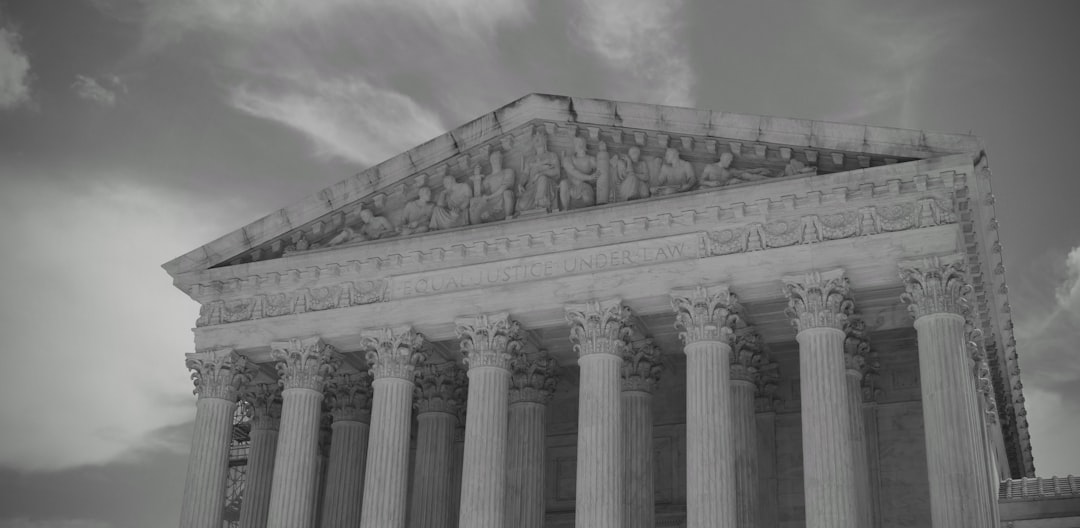
The U.S. Supreme Court ruled 6-3 on June 25 that the Trump administration may proceed with terminating Temporary Protected Status for nationals of Haiti and Syria, a decision that places roughly 350,000 Haitians and tens of thousands of Syrians at risk of deportation to countries the State Department itself designates as “Level 4 — Do Not Travel.”
Justice Samuel Alito authored the majority opinion. The ruling granted the administration’s request to lift lower-court injunctions that had blocked the TPS terminations while litigation continued. Justice Elena Kagan wrote for the three dissenters.
What TPS Provides — and What Its End Would Mean
Temporary Protected Status is a humanitarian designation that shields migrants from removal when their home countries are experiencing armed conflict, natural disaster, or other extraordinary conditions that make safe return impossible. As of the ruling, approximately 1.3 million people from 17 countries hold TPS status and live and work legally in the United States under that protection.
Haiti and Syria both currently carry the State Department’s highest travel warning. Haiti has endured years of gang violence, political instability, and the aftermath of devastating earthquakes. Syria remains largely in a fragile post-civil-war state. Advocates for TPS holders argue that ending the designation will send vulnerable people back to precisely the dangerous conditions the program was designed to address.
Kevin Appleby, a longtime voice on Catholic migration policy, said the decisions “affirm policies which will send human beings back to unstable and dangerous situations.” His concern echoes the consistent position of Catholic social teaching, which holds that every migrant possesses inherent dignity as a person made in the image of God, and that states bear a moral responsibility not to expose vulnerable persons to foreseeable grave harm.
The Racial Motivation Question
A significant portion of the legal dispute centered on whether the administration’s decision to end TPS for Haiti, in particular, was racially motivated. During April oral arguments, U.S. Solicitor General D. John Sauer argued for the government, while Geoffrey M. Pipoly represented Haitian TPS holders challenging the termination.
Challengers pointed to public statements by former Homeland Security Secretary Kristi Noem, who characterized people from Haiti as “killers, leeches, entitlement junkies” — language the plaintiffs argued was evidence of discriminatory intent behind the policy. Justice Alito, writing for the majority, rejected the racial motivation claim.
Justice Kagan’s dissent took sharp aim at the majority’s reasoning. “The evidence is there, plain to see, in the President’s statements, which the majority (and for that matter, his own lawyers) cannot even bear to repeat,” she wrote, suggesting that the court’s majority had declined to engage directly with the most troubling statements made by executive branch officials.
Church Teaching and the Dignity of Migrants
The Catholic Church has long maintained that migration policy must be evaluated in light of the dignity of each human person. The Catechism of the Catholic Church calls on political authorities to welcome foreigners to the extent they are able, while acknowledging the legitimate role of states in regulating borders. But it also insists that those fleeing genuine danger deserve protection and must not be forcibly returned to conditions that threaten their lives or basic welfare.
Pope Leo XIV, who as Robert Francis Prevost spent decades in mission work in Latin America before his election in May 2025, has signaled attentiveness to the pastoral dimensions of migration. The U.S. bishops, through the Catholic Legal Immigration Network and the USCCB’s migration committee, have consistently supported TPS as a program consistent with both American humanitarian tradition and Church teaching on the treatment of the vulnerable.
What Comes Next
The Supreme Court’s order does not resolve the underlying litigation; it permits the administration to move forward with terminations while the cases proceed in lower courts. Affected TPS holders and their legal representatives are expected to continue challenging the terminations on statutory and constitutional grounds.
For the 350,000 Haitians currently living and working legally under TPS, the ruling introduces immediate uncertainty about their legal status, employment authorization, and futures in the United States.
The Court has taken up several high-profile cases involving immigration and religious liberty this term. Earlier this term, the Court also ruled on a case involving a Rastafarian prisoner’s religious freedom claims, part of a broader pattern of religious liberty and civil rights questions reaching the high court.