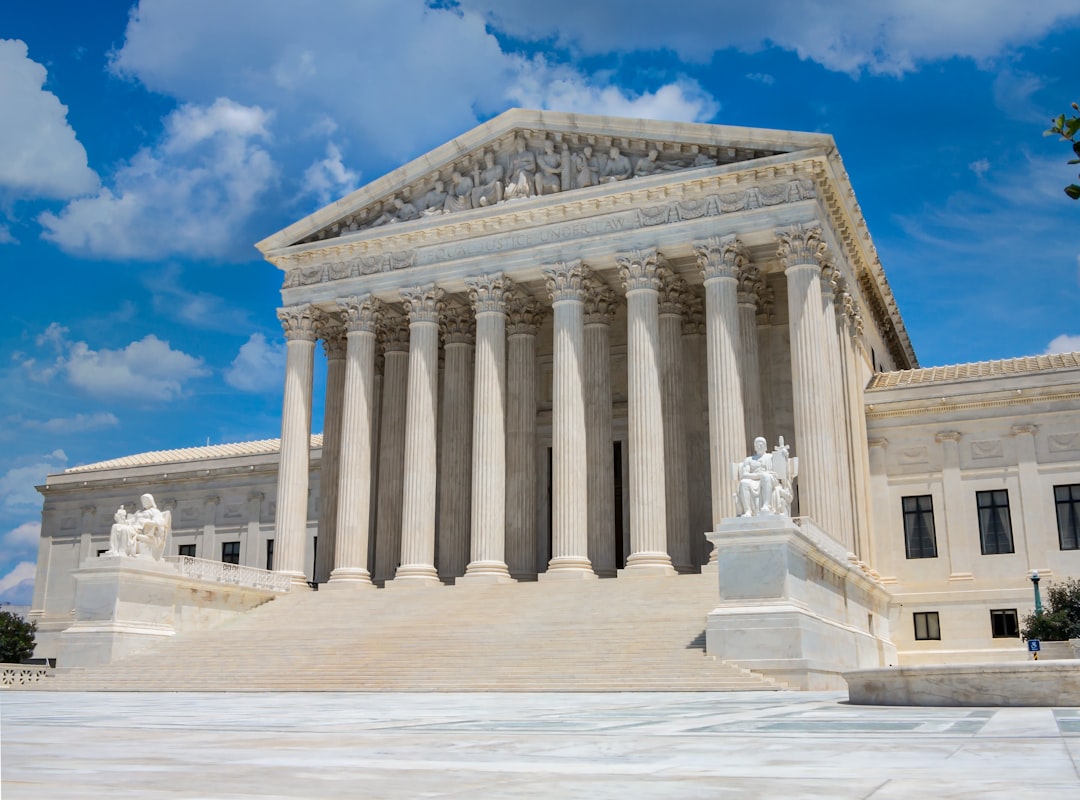
The U.S. Supreme Court issued a pair of significant immigration rulings on June 25, 2026, clearing the way for the Trump administration to reinstate border-metering policies and to end temporary protected status for Haitian and Syrian immigrants — decisions that drew swift concern from Catholic leaders and advocates.
Metering and TPS: What the Court Decided
In the first ruling, the Court permitted the Trump administration to reimpose so-called “metering,” a policy that allows border officials to turn away asylum-seekers at the U.S.-Mexico border before they have set foot on American soil. The decision means that individuals fleeing persecution may be denied even the opportunity to present a claim for asylum without first crossing the border.
In a separate ruling issued the same day, the Court gave the administration authority to terminate temporary protected status for Haitian and Syrian immigrants, a move that places more than one million TPS holders at risk of deportation. Temporary protected status is a humanitarian designation granted to nationals of countries experiencing armed conflict, natural disasters, or other extraordinary conditions that make safe return impossible.
Kevin Appleby, a Catholic immigration advocate, warned that the metering decision would drive vulnerable people into the arms of smuggling networks and into dangerous, remote terrain as they attempt to reach U.S. territory.
Bishop Brendan J. Cahill issued a statement on June 26 underscoring the moral weight of the TPS ruling. “Revoking the legal status of hundreds of thousands of people residing in our country creates a moral crisis when returning to their country of origin is not a safe or reasonable option,” he said. The U.S. bishops have called on Congress to restore TPS protections for Haitians and Syrians, arguing that the Church’s commitment to human dignity demands that the nation not send people back to situations of grave danger.
Catholic social teaching holds that the right to migrate in search of safety and a dignified life is rooted in the universal destination of goods and the inherent worth of every human person. The Catechism of the Catholic Church also obliges political communities to welcome migrants “to the extent they are able,” while recognizing legitimate concerns about order and social cohesion — a balance the current rulings are now forcing lawmakers and the public to reckon with.
A Prison, Dreadlocks, and Religious Liberty
In a separate case decided June 23, the Court ruled 6-3 against Damon Landor, a Rastafarian man who was formerly incarcerated in Louisiana and whose religious dreadlocks were forcibly shaved by prison officials in December 2020 — just three weeks before his sentence ended. A federal appeals court had already found the shaving to be unlawful, but prison officials disregarded that ruling and proceeded anyway.
Despite the apparent violation, the Supreme Court held that Landor could not pursue damages against the individual guards responsible under the Religious Land Use and Institutionalized Persons Act. The decision raises serious questions about the practical enforceability of religious liberty protections for incarcerated persons, a population that Catholic teaching regards as deserving of basic dignity and humane treatment.
Housing Bill Halted by Presidential Demand
In a development with broad implications for working families, President Trump canceled a planned June 24 signing ceremony for a rare piece of bipartisan housing legislation, the 21st Century ROAD to Housing Act. The bill, co-sponsored by Sen. Tim Scott (R-S.C.) and Sen. Elizabeth Warren (D-Mass.), along with Reps. French Hill (R-Ark.) and Maxine Waters (D-Calif.), had passed both the House and Senate by wide margins. It would have eased certain construction regulations and placed limits on large corporate acquisitions of residential properties — measures aimed at improving housing affordability for ordinary Americans.
Trump declined to sign the legislation, insisting that Congress first pass the SAVE America Act, which would require proof of citizenship and a current government-issued ID to vote in federal elections. That bill cleared the House but does not appear to have the sixty votes needed to advance in the Senate. Analysis of voter data suggests that roughly 52 percent of registered voters currently lack an unexpired passport bearing their legal name, a figure relevant to debates about the law’s practical reach.
For the many families struggling with housing costs, the stalled bill represents a missed opportunity. The Church has long taught, most recently in Laudato Si’ and Caritas in Veritate, that access to adequate shelter is a basic human right and that public policy must actively protect the capacity of ordinary people to build stable home lives.
Category: Public Life