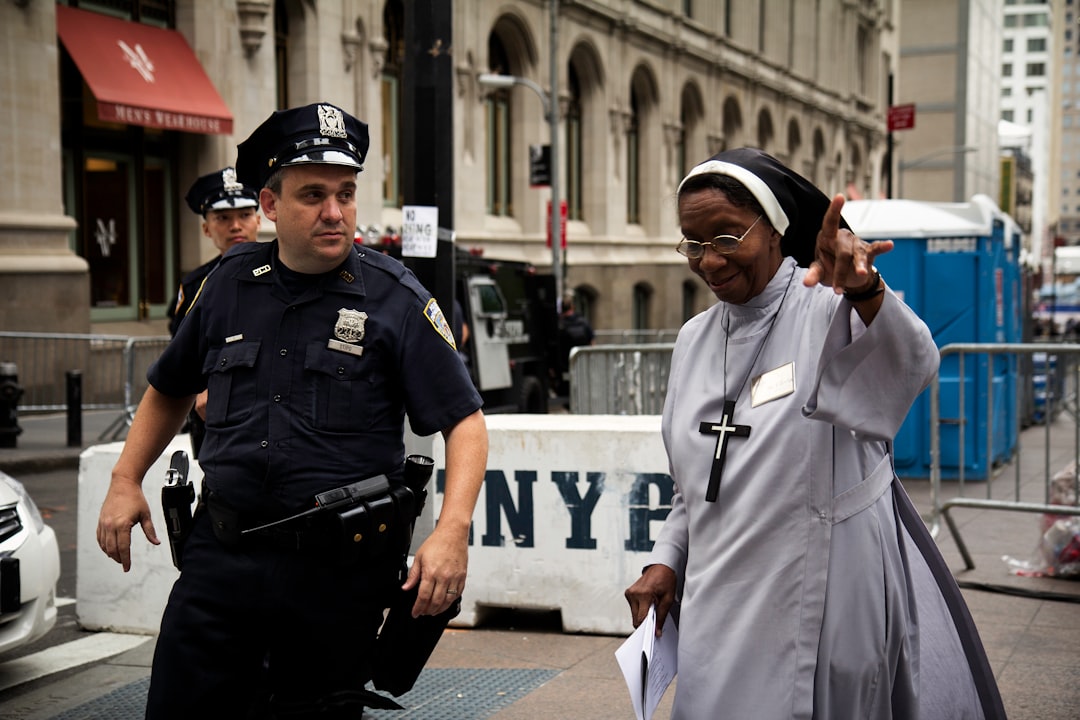
The U.S. Department of Justice has moved to support a congregation of Catholic nuns in their legal battle against a New York regulation requiring their hospice care facility to accommodate transgender women in women-only nursing units.
The Dominican Sisters of Hawthorne, who have operated Rosary Hill Home in Thornwood, New York, for more than 125 years, filed suit against the state after the New York Department of Health issued three warning letters to the congregation. Those letters cited the Sisters for refusing to assign rooms according to residents’ gender identity, for policies on restroom access, and for declining to use preferred names and pronouns for residents.
The Sisters’ Mission and the Legal Stakes
Rosary Hill Home is a 42-bed facility dedicated to the care of terminal cancer patients, provided at no charge. The Sisters describe their mission as a direct expression of their religious vocation — caring for the dying poor in a manner consistent with their Catholic faith. That mission has continued uninterrupted for well over a century, placing the congregation in a tradition of Catholic charitable service with deep roots in New York. Saint Frances Xavier Cabrini similarly built institutions to serve New York’s most vulnerable in the late nineteenth and early twentieth centuries.
The congregation argues that the state’s requirements violate both their First Amendment right to the free exercise of religion and their right not to be compelled to express views contrary to their beliefs — including the use of pronouns at odds with their understanding of the human person.
DOJ Intervention
On June 18, the Justice Department formally notified the U.S. District Court of its intent to intervene in the case. The department’s Civil Rights Division contends that New York’s law violates the constitutional equal protection rights of the religious organization.
Harmeet K. Dhillon, the Assistant Attorney General for Civil Rights, framed the intervention in stark terms, stating that “New York’s law would force these religious women to choose between their faith and their license if they wish to continue serving the dying.” She added that states “cannot require Americans to abandon their religious beliefs in the name of woke gender ideology.”
Broader Religious Liberty Context
The case raises questions that run well beyond any single regulation. Catholic social teaching holds that religious institutions have a proper sphere of autonomy in the exercise of their charitable works — an autonomy rooted not in mere preference but in the Church’s understanding of human dignity and the nature of religious vocation. When the state conditions a ministry’s operating license on conduct that conflicts with its foundational beliefs, it places religious institutions in an impossible position.
Similar tensions between state anti-discrimination frameworks and the internal governance of faith-based ministries have been tested in courts across the country. The Ninth Circuit is currently weighing a related question about whether religious ministries may lawfully hire according to shared belief.
No court date for the DOJ’s formal intervention has been announced. The case will proceed in U.S. District Court, where the Sisters’ underlying First Amendment claims remain pending alongside the government’s equal protection argument.
Category: Public Life